
Some places you visit. Hilo you get rained on, and that is exactly the point. This little city on the windward side of Hawaii’s Big Island is the wettest in the United States, soaking up more than 130 inches of rain a year. All that water is not a nuisance to plan around. It is the whole reason Hilo is worth the trip.
That rain feeds the greatest concentration of accessible waterfalls in Hawaii, keeps the rainforest dripping and green, fills the rivers that carve the coast, and pools into the black-sand tide pools where turtles rest. If you care at all about water, and where it comes from and where it goes, Hilo is a living demonstration of what water can build when it is left to do its thing.
The catch is that the same water that makes Hilo beautiful can be dangerous and deserves real respect. The rivers here drain the slopes of Mauna Kea and can rise without warning. The reefs are fragile. So how you experience Hilo, and how carefully you tread, matters. Traveling with a bit of a water-conscious mindset makes the trip better and safer, not just greener.
A few things separate a good day from a rough one. A local guide knows which falls are roaring and which streams are unsafe after rain. Small groups tread lighter. You want to time things right, morning for the rainbows and the calmest snorkeling, and you want an operator who takes reef and wildlife rules seriously. Here are the best ways to experience it, ranked.
1. Compare and Book It All in One Place
Hilo has waterfall drives, rainforest walks, snorkel spots, and volcano day trips, all with different timing, conditions, and operators. Sorting that from home, especially the weather-dependent parts, is genuinely tricky. Hilo Tours is a resource built around this exact side of the island, so instead of guessing you get the experiences laid out clearly with real local detail on timing, safety, and what each one involves.
The value is that it steers you around the mistakes. You can see which falls are worth the drive, which snorkel spots suit the conditions, and which tours combine the highlights efficiently, rather than showing up at a closed trail or a flooded overlook.
You can compare Hilo waterfall and ocean tours here and plan around the weather before you arrive, which matters more in Hilo than almost anywhere.
Best for anyone who wants a well-timed trip without gambling on the forecast. If you know exactly what you want, book it directly.
2. Chase the Waterfalls
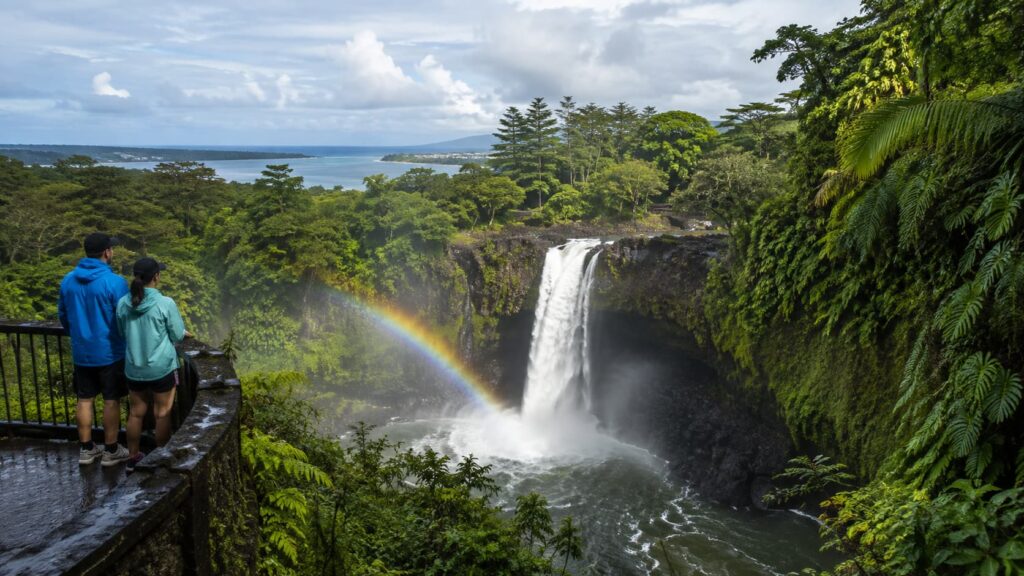
This is the headline act. Rainbow Falls sits five minutes from downtown Hilo, free, with a paved overlook right by the parking lot. Its Hawaiian name, Waiānuenue, means rainbow seen in water, and on a clear morning before 10am the sun catches the mist and you see exactly why. Just upstream are Peʻepeʻe Falls and the Boiling Pots.
For something taller, drive 35 minutes north to Akaka Falls State Park, where the water free-falls 442 feet through a rainforest gorge on a short paved loop. It is one of the most spectacular waterfalls in the state and easy to reach.
One serious note: swimming is banned and dangerous at Rainbow Falls and most Hilo streams. A plaque there counts 27 deaths in that stretch of river, and the water can surge from rain you never even feel. Look, photograph, and stay behind the railings.
Best for anyone who wants Hawaii’s easiest, most rewarding waterfall viewing. These are viewpoints, not swimming holes.
3. Walk the Rainforest Coast
The rain does not just make waterfalls, it makes an entire dripping, green world, and the Hamakua Coast just north of Hilo is the place to walk into it. The Hawaii Tropical Bioreserve and Garden at Onomea Bay winds through dense rainforest down to the ocean, past smaller waterfalls and streams, with the plants that all that water sustains crowding in on every side.
Closer to town, Liliʻuokalani Gardens on Hilo Bay offers a calmer version, a serene Japanese garden with bridges and ponds fed by the same abundant water.
It rains here, obviously, so you will likely get damp. That is part of the deal, and the rainforest is at its most alive in a light shower.
Best for travelers who love lush landscapes and want to understand the ecosystem the rain creates. Bring a rain jacket and expect mud.
4. Snorkel the Tide Pools
Hilo’s water story does not end at the shoreline. Richardson Ocean Park, about ten minutes from town, is a black-sand beach with protected coves, tide pools, and the best snorkeling on the Hilo side, with colorful reef fish and sea turtles resting in the shallows. Carlsmith Beach Park nearby is another calm, family-friendly option.
These coves are living aquatic habitats, and how you behave in them matters. Keep at least ten feet from any sea turtle, never touch or feed marine life, and wear reef-safe sunscreen, which is now required by Hawaii law to protect the coral. Go when the surf is low and check lifeguard advisories first.
Best for snorkelers and families who want easy, wildlife-rich water. Not the spot for big-wave swimming or when surf is up.
5. See Where Water Meets Fire
For the dramatic finale, take a day trip to Hawaii Volcanoes National Park, about 45 minutes from Hilo. It is the one place where you see water and fire share the same ground, rainforest and fern gullies giving way to steam vents where groundwater meets volcanic heat and rises straight out of the earth.
Standing at the Kilauea caldera, with steam drifting up from cracks fed by rainwater seeping down to the heat below, is a genuinely humbling reminder of how water moves through a landscape.
It is a full day and a lot of walking, and conditions change with volcanic activity, so check the park status before you go.
Best for adventurous travelers who want the Big Island’s most powerful scenery alongside its water.
A Few Practical Things Before You Go
Give Hilo a few days and base yourself here. The wet season, October to April, brings the biggest falls, though it also brings the most rain, and honestly the falls are most impressive right after a downpour. Mornings are best, for rainbows at the falls and calm water for snorkeling.
Respect the water and it will reward you. Do not swim in the streams and waterfalls, both for your safety and because these waters carry leptospirosis and flash-flood risk. Keep your distance from turtles, skip touching the coral, and use only reef-safe sunscreen. Akaka Falls State Park charges a small fee, credit card only.
Pack light rain gear, water shoes or sturdy sandals, and reef-safe sunscreen. For planning, the official Go Hawaii site is a clean starting point, and Hawaii’s Department of Land and Natural Resources has the current details on state parks and protecting the islands’ waters. Both pair well with any related travel or conservation guides already on the site.
Choosing the Right Adventure for You
Hilo rewards travelers who follow the water and treat it with care.
Start by comparing your options through Hilo Tours so you plan around the weather and conditions. Want the iconic cascades, chase Rainbow and Akaka Falls. Want to walk into the rainforest the rain creates, take the Hamakua coast and gardens. Want to get in the water, snorkel the tide pools at Richardson. Want raw power, take the volcano day trip.
However you do it, pay attention to the water while you are here. It carved this place, it sustains it, and seeing that up close tends to change how you think about every drop back home.
Author note: recommendations here are based on well-established Hilo sites and the current safety and conservation rules. Conditions, fees, and access change with weather and volcanic activity, so confirm the current details before you go.